
Our History
History of St. Alban's Episcopal Church
The first known Episcopal service in Elberton was held on September 10, 1894, at the Methodist Church by Rev. O. T. Porcher of Greenwood, South Carolina. The first organized Episcopal community was the Church of the Holy Apostles in 1898. This mission church disbanded in 1906, but services revived under the direction of the Rev. Thomas Duck of Toccoa.
By the 1930s, the mission congregation was meeting in the home of Dr. and Mrs. Hawes on Heard Street, and services were held by the Rev. David Cady Wright of Athens. The church's name was changed to St. Alban's in 1941, the same year the present church building was completed and dedicated. This took place on September 10, at the same time the first minister, the Rev. J. Britt Ellington, was ordained. Both ordination and dedication were performed by the Rt. Rev. H. J. Mikell. Granite for the new building was donated by Mr. B. Frank Coggins Sr.
St. Alban's was granted full parish status by the Diocese of Atlanta in 1960. In the seventy years since the present church building was completed, the Rev. Herschel Atkinson has had the longest tenure as priest (from 1970 through October 31, 1997).
Over the years, there have been various improvements to the church building and grounds. In 1956, a new parish house was built at the rear of the existing church. The addition contained various small rooms and offices on the upper floor and a kitchen and large assembly room on the lower floor. Around the turn of the century (ca. 2000), St. Alban's acquired a paved parking lot, and in 2014, a driveway, with a turnaround, was added from the parking lot to the downstairs Parish Hall doors for improved access. As of 2015, the kitchen was finally renovated.
St. Alban's Stained Glass
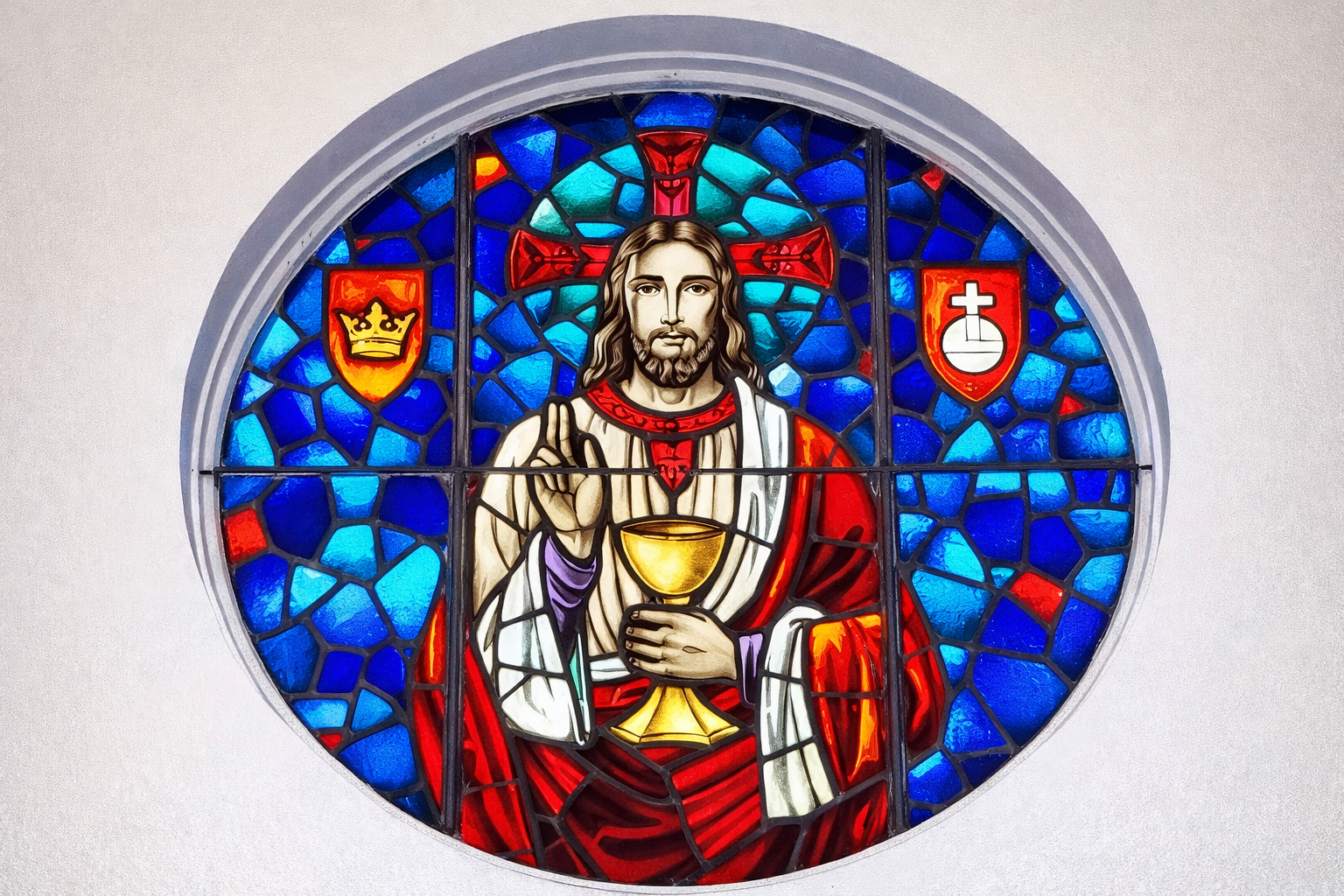
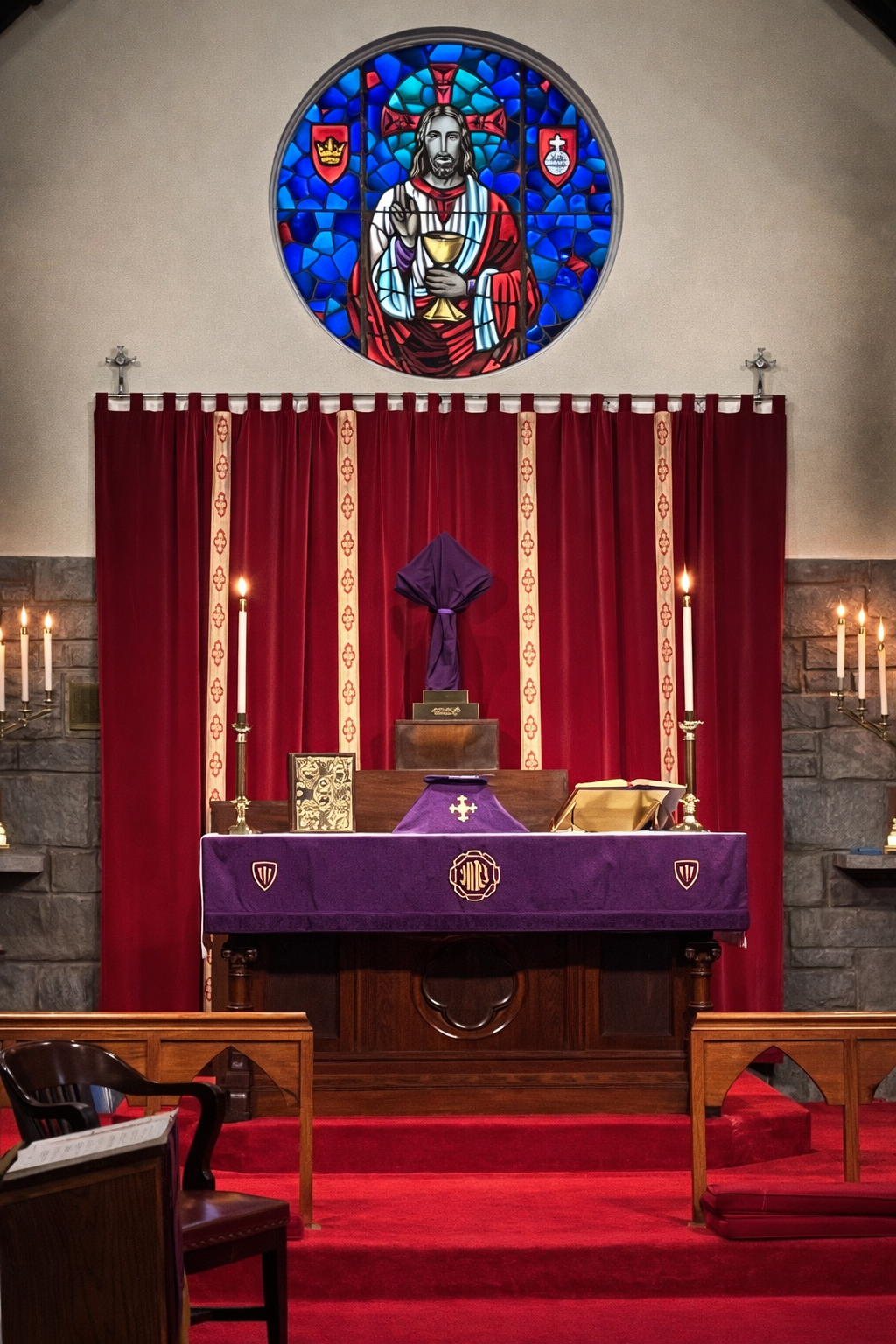
St. Alban's church is its stained-glass windows, installed in the 1950s, is a round window over the altar that depicts the risen Christ. He is clad in Resurrection colors, white and red, and his hands are scarred.
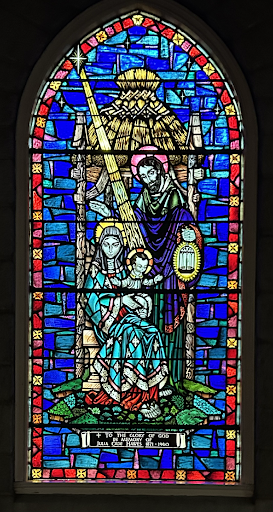
The second window (second image in slideshow) was made in 1961 for St. Alban's in the studios of George L. Payne of Paterson, NJ, the American representative of the English firm J. Wippell and Company. A nativity scene in the old Gothic style, it is set in the back of the nave.
From a member's desire to add a window depicting a lamb as a memorial to a grandson who had died in infancy, a set of seventeen windows grew in the early 1970s, running down both sides of the church. Wippell designed and manufactured the windows. The lamb window is in the back of the church, near the font. The series runs chronologically from the front on the left to the church door on the right: it shows the Lamb of God, then, on the left, the preparation for Jesus' earthly ministry, and, on the right, that ministry and its aftermath. St. Paul (the Apostle to the Gentiles) and St. Alban (the earliest known British martyr) share the last window.
“The book of the story of the Lamb of God, and the first window is its title page... A particularly good point is the flowing blue partial background that ties them all together.”
— The Rev. Herschel Atkinson, Former Rector